
On this page
TL;DR
The UK reference intake for adults is 0.75g of protein per kg of body weight a day (about 60g for 80kg). People who train regularly should aim for 1.4 to 2.0g per kg (ISSN), and over-65s for 1.0 to 1.2g per kg or more if active (PROT-AGE). Spread protein over three or four meals of about 20 to 40g.
Key takeaways
- UK minimum: 0.75g of protein per kg a day.
- If you train: 1.4 to 2.0g per kg a day.
- Over 65: at least 1.0 to 1.2g per kg.
- Spread it over meals of about 20 to 40g.
The UK reference intake for adults is 0.75g of protein per kg of body weight a day: about 60g for an 80kg adult. That's a minimum for health, not a target for muscle. If you train regularly, the International Society of Sports Nutrition recommends 1.4 to 2.0g per kg a day; for people over 65, an expert group recommends 1.0 to 1.2g per kg. Spread it over three or four meals of roughly 20 to 40g.
How much protein do you need by goal?
| Who | Protein per kg of body weight a day | Source |
|---|---|---|
| Adults, general health (minimum) | 0.75g | UK Reference Nutrient Intake |
| Adults over 65 | 1.0 to 1.2g, more if active | PROT-AGE expert group |
| People who train regularly | 1.4 to 2.0g | International Society of Sports Nutrition |
| During weight loss on GLP-1 medicines | 1.2 to 1.6g has been proposed; ask your clinician | 2025 joint advisory |
How much protein is that for your weight?
| Body weight | UK minimum (0.75g/kg) | Over 65 (1.0 to 1.2g/kg) | Training (1.4 to 2.0g/kg) |
|---|---|---|---|
| 60kg | 45g | 60 to 72g | 84 to 120g |
| 70kg | 53g | 70 to 84g | 98 to 140g |
| 80kg | 60g | 80 to 96g | 112 to 160g |
| 90kg | 68g | 90 to 108g | 126 to 180g |
| 100kg | 75g | 100 to 120g | 140 to 200g |
If you're carrying a lot of extra body fat, work from a sensible goal weight rather than your current weight.
How much protein should you eat per meal?
The ISSN suggests spreading protein across the day, with about 0.25g per kg of body weight (roughly 20 to 40g) per meal, every three to four hours. That's easier on your appetite than trying to eat 60g in one go, and it gives your muscles a steady supply.
What does 120g of protein look like in a day?
- Breakfast: three medium eggs (about 19g; around 6.4g each) on toast, plus a glass of milk.
- Lunch: a chicken salad sandwich and a Greek yoghurt.
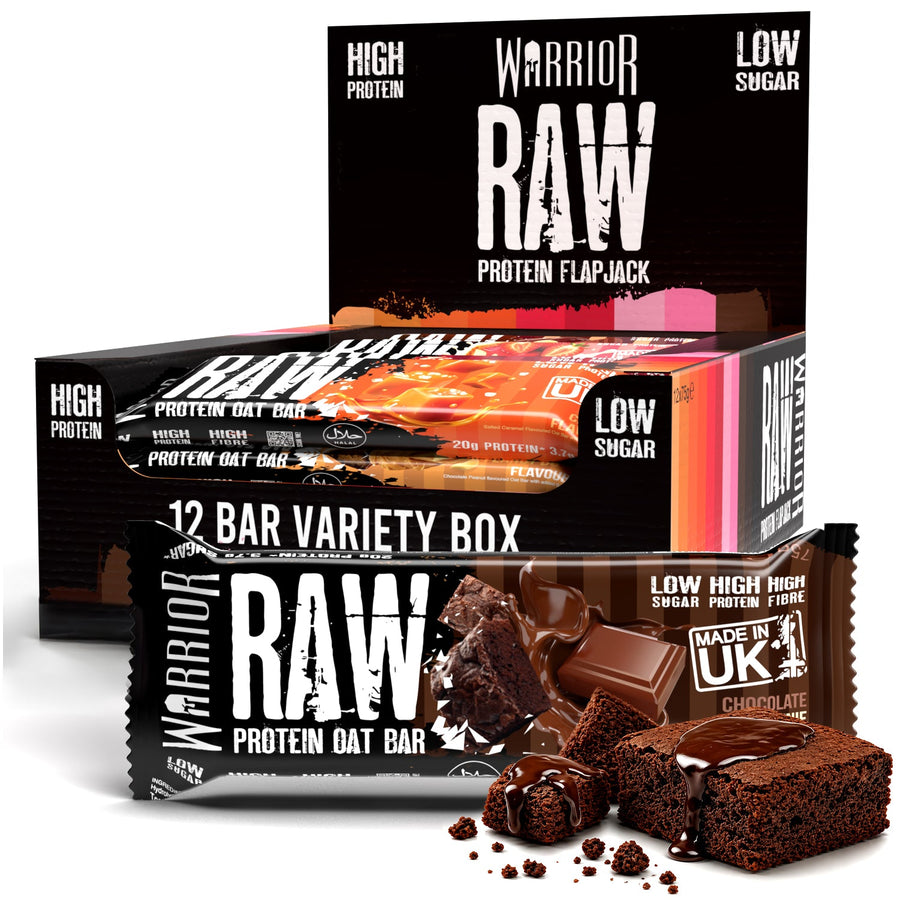
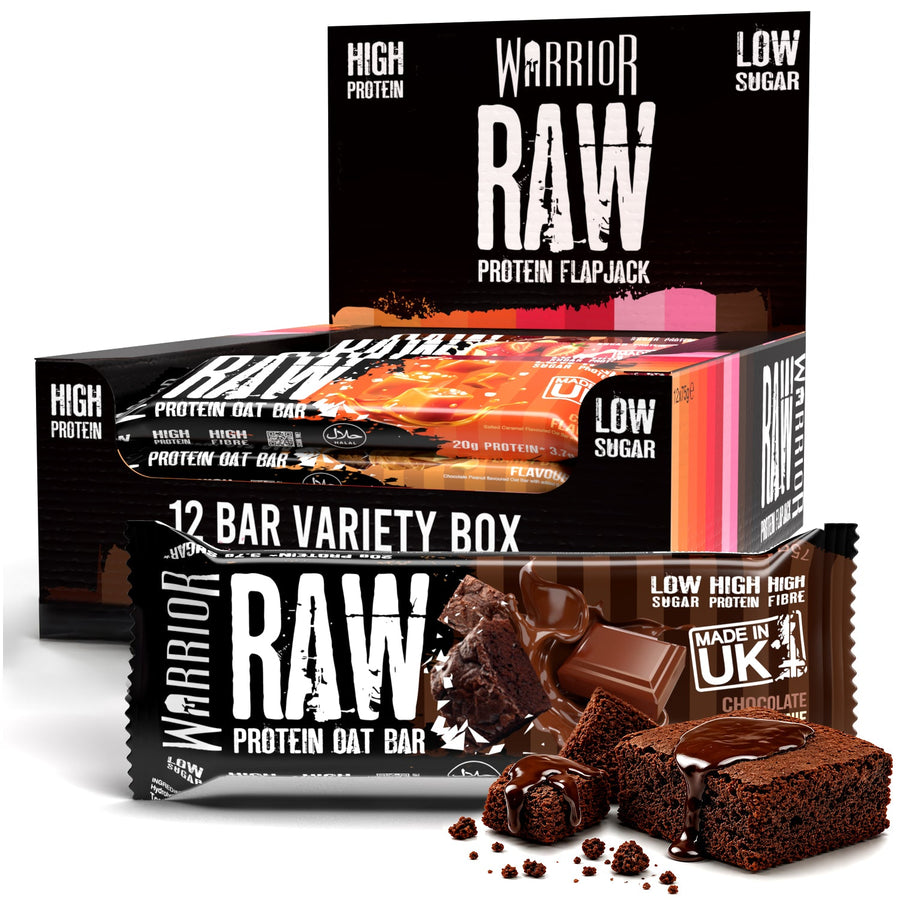
- Snack: a Warrior RAW bar: 20g of protein for about £1.
- Dinner: a portion of chicken, fish or lean mince with potatoes or rice and vegetables.
- If short: a 30g serving of Warrior Serious Protein: 24g of protein for about 78p.
Can you eat too much protein?
For healthy people, intakes within the ranges above are widely used in sport. If you have kidney disease, speak to your GP or a dietitian before increasing protein. Remember that protein is one part of a balanced diet; fibre, fruit and vegetables still matter.
Why does protein matter?
Protein contributes to the growth and maintenance of muscle mass, and to the maintenance of normal bones. If you train, it helps you get the most from your work in the gym. As you get older, it helps protect the muscle you have. For more, see protein on a budget and strength training at 50.
Common questions
How much protein do I need to build muscle?
Around 1.4 to 2.0g per kg of body weight a day, alongside regular resistance training, according to the ISSN.
Is 100g of protein a day enough?
It depends on your weight and goal. For a 70kg person who trains, it's within the recommended range. For a 100kg person training hard, it's on the low side.
Do I need protein shakes?
No, if food covers your target. Shakes and bars just make it easier.
How much protein is in an egg?
About 6.4g in a medium egg, according to the British Egg Information Service.
The bottom line
The UK minimum is 0.75g of protein per kg a day, but if you train, aim for 1.4 to 2.0g per kg, and if you're over 65, at least 1.0 to 1.2g. Spread it over three or four meals of 20 to 40g. Food first, with shakes and bars to fill the gaps. Try Warrior Serious Protein.
Sources
- British Nutrition Foundation: Protein (UK Reference Nutrient Intake for adults 0.75g per kg body weight per day). https://www.nutrition.org.uk/nutritional-information/protein/
- Jäger R et al. (2017). International Society of Sports Nutrition position stand: protein and exercise. Journal of the International Society of Sports Nutrition 14:20. https://doi.org/10.1186/s12970-017-0177-8
- Bauer J et al. (2013). Evidence-based recommendations for optimal dietary protein intake in older people: a position paper from the PROT-AGE Study Group. JAMDA 14(8):542-559. https://doi.org/10.1016/j.jamda.2013.05.021
- Mozaffarian D et al. (2025). Nutritional priorities to support GLP-1 therapy for obesity: a joint advisory. Obesity 33(8):1475-1503. https://doi.org/10.1002/oby.24336
- British Egg Information Service: Protein in eggs (6.4g per medium egg). https://www.egginfo.co.uk/egg-nutrition/information/protein-in-eggs
- Great Britain nutrition and health claims (NHC) register. https://www.gov.uk/government/publications/great-britain-nutrition-and-health-claims-nhc-register
- Warrior: Warrior Serious Protein 500g (£12.50, 16 servings; 24g protein per 30g). https://teamwarrior.com/products/warrior-serious-protein-500g (checked 19 November 2026)
- Tesco: Warrior RAW Protein Flapjack Peanut Butter Cup 75g (£1.00; 20.1g protein). https://www.tesco.com/shop/en-GB/products/321030370 (checked 19 November 2026)
 Shop the guideWarrior Serious Protein - 500g
From £12.50