
On this page
TL;DR
A 2019 Harvard study in JAMA Network Open followed 1,104 active male firefighters for 10 years: those who could do more than 40 push-ups had a 96% lower risk of cardiovascular disease events than those who did fewer than 10. It's observational and may not apply to everyone, but push-ups are a free fitness check. Train them three times a week and add a rep or two per set each week.
Key takeaways
- More than 40 push-ups was linked with 96% fewer heart events.
- The study was observational, in active male firefighters.
- Test yourself and retest every 2 to 4 weeks.
- Train three times a week, short of failure.
- Pair push-ups with pulling work and enough protein.
There's no official number, but 40 has become the benchmark. In a Harvard study of 1,104 active firefighters published in JAMA Network Open in 2019, men who could do more than 40 push-ups had 96% fewer cardiovascular disease events over 10 years than men who could do fewer than 10. It's an observational study in one group of people, so it doesn't prove push-ups protect your heart, but push-up capacity is a quick, free check of your fitness. If you can't do 40 yet, you can build towards it with three short sessions a week.
What did the push-up study actually find?
| Detail | Finding |
|---|---|
| Who | 1,104 active male firefighters, average age about 40, in the US |
| Follow-up | 10 years |
| Main result | More than 40 push-ups: 96% lower risk of cardiovascular disease events than fewer than 10 |
| Surprise | Push-up capacity was more strongly linked to heart risk than a submaximal treadmill test |
| Limits | Observational; the authors say results may not apply to women or to men of other ages or activity levels |
The honest reading: being able to do a lot of push-ups is a marker of overall fitness and strength, and fitness is linked with a healthier heart. Push-ups are a great way to build and track that fitness.
How do you do the push-up test?
- Warm up for a few minutes.
- Hands just wider than your shoulders, body in a straight line from head to heels.
- Lower until your chest is about a fist from the floor, then push back up to straight arms.
- Count clean reps until your form breaks: hips sagging or piking, or reps not reaching depth.
- Write the number down and retest every two to four weeks.
If you have a heart condition or chest pain with exercise, speak to your GP before testing yourself to your limit.
How do you get better at push-ups?
Practise often, stop short of failure most of the time, and add a little each week. Start at the level where you can do clean reps:
| Your test score | Start with | Three times a week |
|---|---|---|
| 0 to 5 | Incline push-ups (hands on a bench or worktop) | 4 sets of 8 to 12; lower the incline as it gets easy |
| 6 to 20 | Full push-ups | 5 sets at about half your max, plus one set of slow 3-second lowers |
| 21 to 40 | Full push-ups with volume | Sets at about 60% of your max until you reach a daily total of 2 to 3 times your max |
| 40+ | Harder variations | Feet raised, weighted vest or a pause at the bottom |
Add one or two reps per set each week. Most people who stick to this for 8 weeks see a big jump in their test score. Pair push-ups with pulling work so your shoulders stay balanced: see how to do a pull-up.
Do push-ups build muscle?
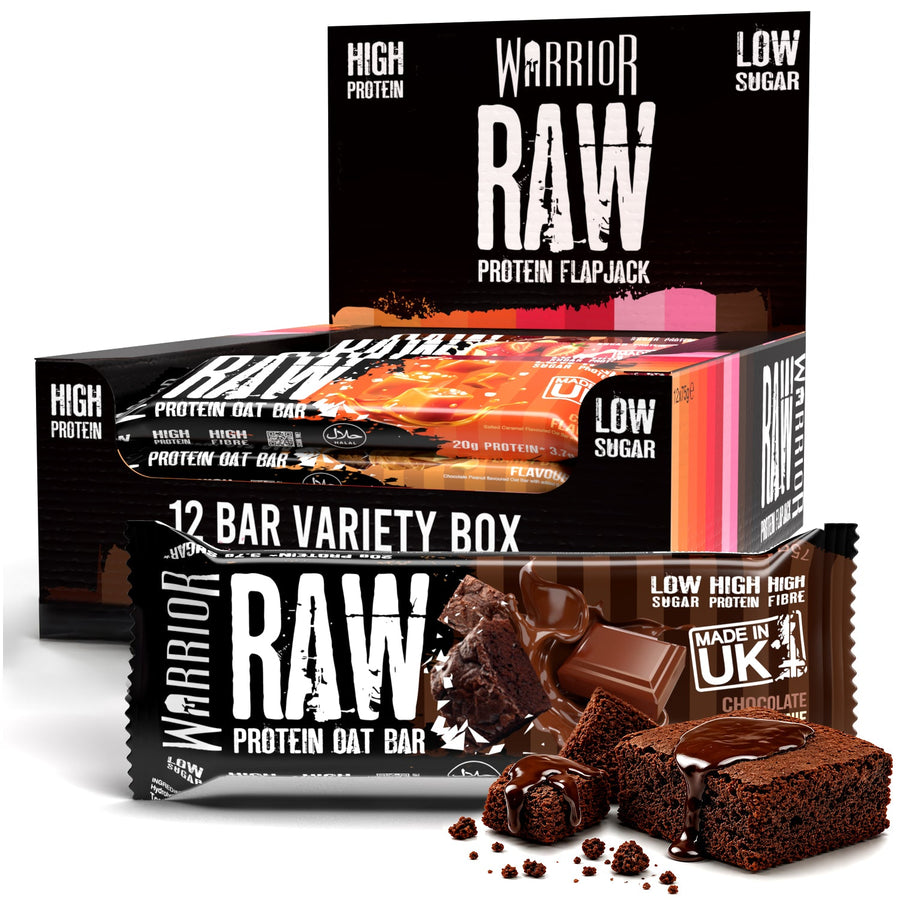
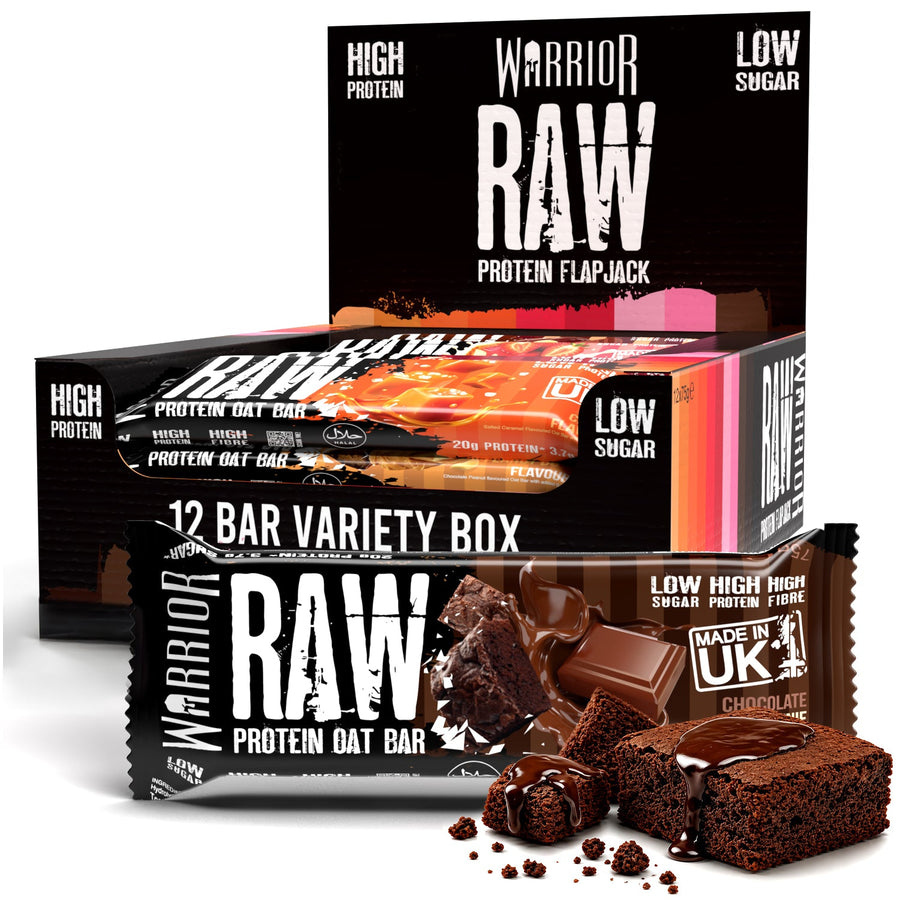
Yes, especially in the chest, shoulders and triceps, as long as you keep making them harder. Muscle is built by training plus enough protein. The ISSN suggests 1.4 to 2.0g of protein per kg of body weight a day for people who exercise, and protein contributes to the growth and maintenance of muscle mass. A shake of Warrior Serious Protein (no added sugar; contains naturally occurring sugars) or a Warrior RAW bar (20g of protein for about £1) helps you hit your number. More in how much protein you need a day.
Common questions
How many push-ups should a 40-year-old be able to do?
There's no official standard. In the Harvard study, men averaging about 40 years old who could do more than 40 had far fewer heart events than those who could do fewer than 10. More than 40 is a strong target; any improvement is worth having.
Does doing push-ups prevent heart disease?
The study shows a link, not proof. Push-up capacity reflects overall fitness, and improving fitness is good for your heart.
Is it OK to do push-ups every day?
Easy daily sets are fine for most people if your shoulders and elbows feel good. Keep the hard sessions to three a week.
Are knee push-ups worth doing?
They're a fine starting point. Incline push-ups are often better because you keep the full-body plank position.
How do I test my fitness at home?
A push-up test, a timed plank, a dead hang and a timed walk or run give you a simple picture. Retest every few weeks.
The bottom line
Drop and give me 40 is a good goal, not a verdict. Test yourself, write the number down, and beat it a little each week. Strength you build now is strength you keep. That's the Warrior Code.
Sources
- Yang J et al. (2019). Association between push-up exercise capacity and future cardiovascular events among active adult men. JAMA Network Open 2(2):e188341. https://doi.org/10.1001/jamanetworkopen.2018.8341
- Harvard T.H. Chan School of Public Health (15 February 2019): Push-up capacity linked with lower incidence of future cardiovascular disease events among men (96% reduced risk; more strongly associated than submaximal treadmill tests; results may not be generalisable to women or men of other ages or activity levels). https://www.hsph.harvard.edu/news/press-releases/push-up-capacity-cardiovascular-disease-events-men/
- Jäger R et al. (2017). International Society of Sports Nutrition position stand: protein and exercise. Journal of the International Society of Sports Nutrition 14:20. https://doi.org/10.1186/s12970-017-0177-8
- Tesco: Warrior RAW Protein Flapjack Peanut Butter Cup 75g (£1.00; 20.1g protein). https://www.tesco.com/shop/en-GB/products/321030370 (checked 19 November 2026)
 Shop the guideWarrior Serious Protein - 500g
From £12.50