
On this page
TL;DR
UK fire and rescue services require a VO2 max of at least 42.3ml/kg/min, a standard set by University of Bath research. North Wales Fire and Rescue says that equals level 8.8 on the bleep test; some services use a Chester treadmill test or a 1.5-mile Cooper run instead. Candidates also pass practical tests such as the ladder lift and equipment carry. Train three runs and two strength sessions a week for 8 weeks.
Key takeaways
- The UK firefighter standard is 42.3ml/kg/min.
- About level 8.8 on the bleep test (North Wales FRS).
- Some services use a treadmill or 1.5-mile run.
- Practical tests include the ladder lift and equipment carry.
- Train 8 weeks and aim well above the line.
To join a UK fire and rescue service you need an aerobic fitness (VO2 max) of at least 42.3ml/kg/min, plus a pass in practical tests such as the ladder lift and equipment carry. Services test aerobic fitness in different ways: North Wales Fire and Rescue says 42.3 equals level 8.8 on the bleep test, while others use a treadmill test or a 1.5-mile run. Train your running engine, your strength and your grip for 8 weeks and aim well above the line.
What is the firefighter fitness standard in the UK?
Researchers at the University of Bath worked out a minimum cardiorespiratory standard of 42.3ml/kg/min for operational firefighters, based on the real tasks of the job: running hoses, carrying equipment, rescuing casualties and fighting fires, all in protective kit. Fire services across the UK now use 42.3 as the standard for recruits. Cornwall Fire and Rescue Service calls it the national minimum for anyone joining.
How is your fitness tested?
| Test | What it involves | Example of a service using it |
|---|---|---|
| Bleep test (multi-stage fitness test) | 20m shuttles getting faster each level; 42.3 is about level 8.8 (roughly 8.5 minutes of running) | North Wales, Cornwall, North Yorkshire |
| Treadmill test (such as the Chester treadmill test) | A graded treadmill walk or run that predicts VO2 max | Mid and West Wales, Avon (on-call) |
| Cooper test | A timed 1.5-mile run; your target time depends on your body weight | Avon (wholetime) |
| Practical tests | Job-based tasks in firefighting kit, such as the ladder lift, equipment carry, enclosed space and drill ground tasks | All services, as part of selection |
Every service sets out its own process, so check the recruitment page of the service you're applying to. Once you're in, fitness doesn't stop: North Wales Fire and Rescue, for example, runs an annual health and fitness review with an aerobic fitness test.
How do you train for the firefighter bleep test?
You need two things: an aerobic base, and the ability to turn and accelerate every 20 metres. Run three times a week:
- Easy run: 25 to 40 minutes at a pace you can talk at.
- Intervals: 6 to 10 x 2 minutes hard, 1 minute easy.
- Shuttle practice: 20m shuttles with sharp turns, or a full bleep test every two weeks to track progress.
Aim to hit level 10 in training, so 8.8 on the day feels controlled, not desperate.
How do you train for the practical tests?
The practical tests are about strength, grip and staying calm under load. Twice a week in the gym:
| Exercise | Sets and reps | Why |
|---|---|---|
| Deadlift or trap bar deadlift | 4 x 5 | Lifting ladders and casualties from the floor |
| Farmers carry | 4 x 40m | Equipment carry and grip |
| Overhead press | 3 x 8 | Pushing and lifting above your head |
| Sled drag or backwards dummy drag | 4 x 20m | Casualty evacuation |
| Weighted step-ups or stair climbs | 3 x 2 minutes | Climbing with kit on |
| Dead hang | 3 x as long as you can | Grip under fatigue |
If you can, practise moving in a confined space, such as crawling through a low tunnel in the dark. Calm breathing matters as much as fitness there. See why grip strength matters and the rucking guide for loaded walking.
What's a simple 8-week plan?
| Weeks | Running | Strength |
|---|---|---|
| 1 to 2 | 3 easy runs, 25 minutes; bleep test to find your start level | 2 sessions; learn the lifts with moderate weights |
| 3 to 4 | 2 easy runs plus 1 interval session (6 x 2 minutes) | 2 sessions; add weight each week |
| 5 to 6 | 2 easy runs plus 1 interval session (8 to 10 x 2 minutes); retest | 2 sessions; heavier carries and drags |
| 7 to 8 | Keep intervals, shorten easy runs; ease off in the last 4 days | 1 to 2 lighter sessions; rest before test day |
What should you eat when training for the fire service?
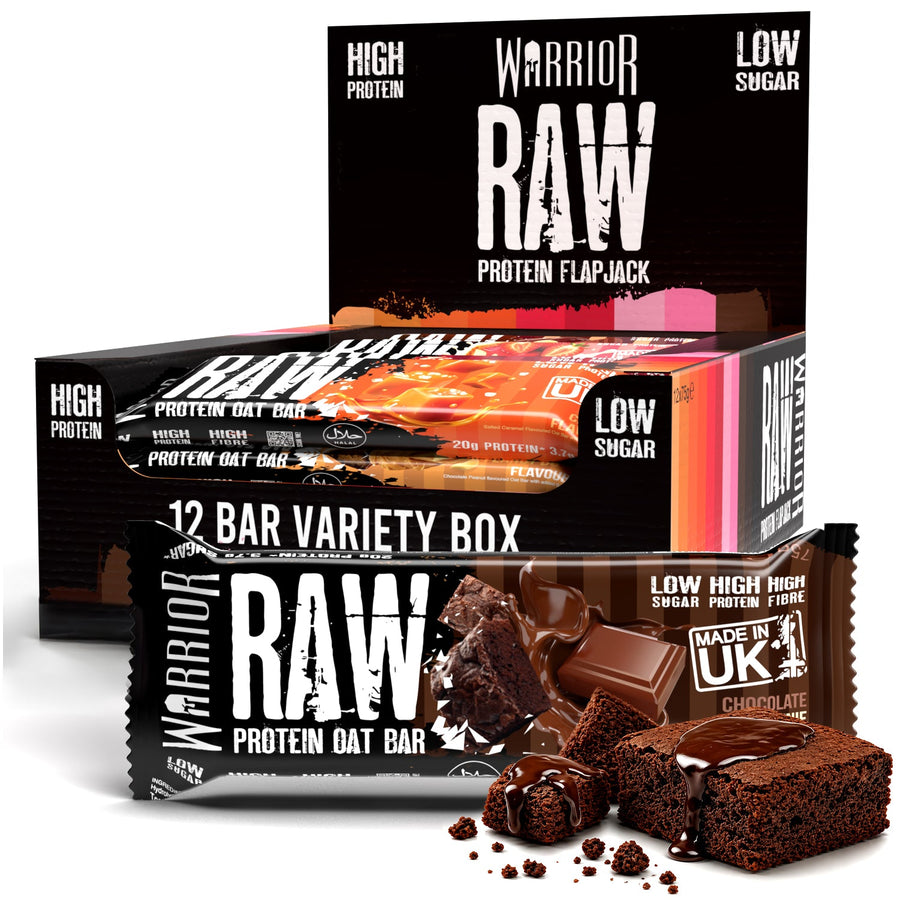
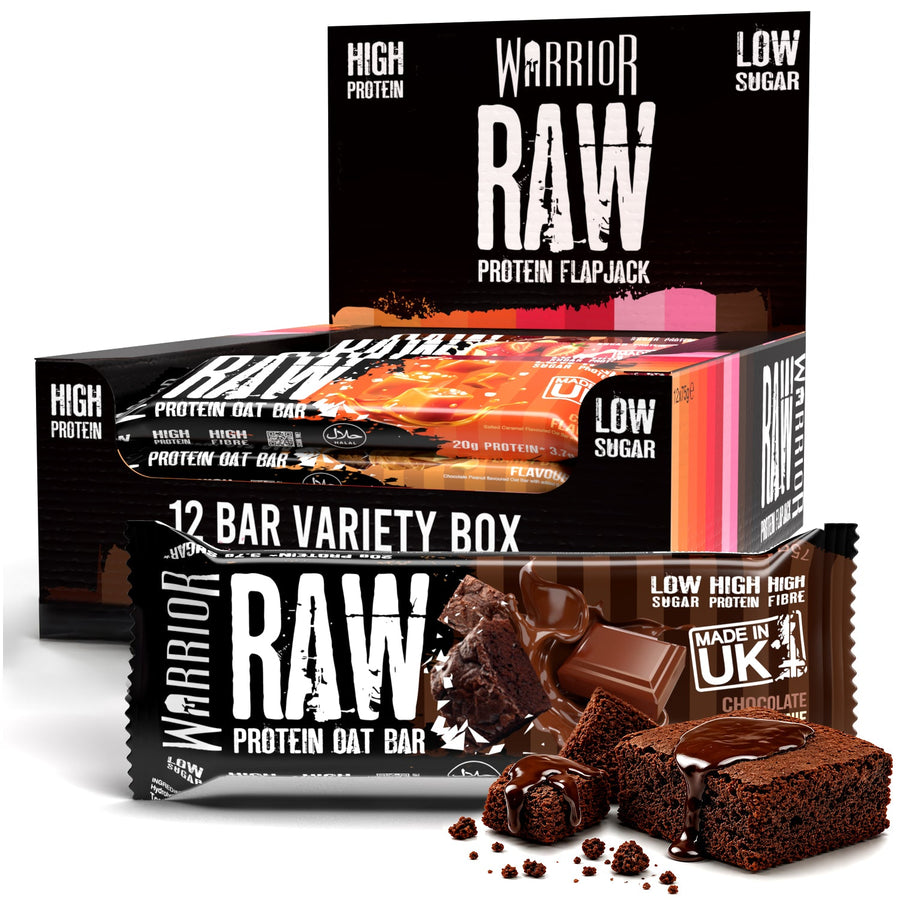
Fuel the work and recover from it. Build meals around protein, carbohydrate and vegetables, and spread protein through the day: the ISSN suggests 1.4 to 2.0g per kg of body weight a day for people who exercise. Protein contributes to the growth and maintenance of muscle mass. A Warrior RAW bar gives 20g of protein for about £1 and lives happily in a kit bag; one or two a day is plenty. After strength sessions, a shake of Warrior Serious Protein (no added sugar; contains naturally occurring sugars) makes hitting your number easy.
Creatine is worth considering for the gym side: it increases physical performance in successive bursts of short-term, high-intensity exercise, with the benefit seen at 3g of creatine a day. Warrior Creatine Plus Electrolytes puts creatine with sodium, potassium and magnesium in one drink.
Common questions
What bleep test level do you need to be a firefighter?
The standard is a VO2 max of 42.3ml/kg/min. North Wales Fire and Rescue says that equals level 8.8 on the bleep test. Check your own service, as test methods vary.
Is the firefighter fitness test hard?
It's set at the level the job needs. With 8 weeks of steady training most healthy people can reach it, but don't leave it to chance.
What are the firefighter practical tests?
Job-based tasks done in firefighting kit, such as a ladder lift, an equipment carry, an enclosed space test and drill ground tasks. Details vary by service.
Do firefighters have to stay fit after joining?
Yes. Services run regular fitness reviews; North Wales, for example, has an annual health and fitness review.
Is the fitness standard different if I'm older?
The recruitment standard is the job standard, so it doesn't change with age. Check your service's eligibility rules, then train to beat the standard: that part is in your control.
The bottom line
The standard is 42.3. Train to beat it, not scrape it: three runs a week, two strength sessions, good food and sleep for 8 weeks. Running towards danger is a choice. Being ready for it is a habit. That's the Warrior Code. Joining the police instead? Read the police fitness test guide.
Sources
- University of Bath: Bath scientists set standard for UK firefighter fitness (minimum cardiorespiratory standard of 42.3ml/kg/min). https://bath.ac.uk/announcements/bath-scientists-set-standard-for-uk-firefighter-fitness-in-changing-britain
- North Wales Fire and Rescue Service: On-call firefighters, fitness (42.3 mls/O2/kg/min, equivalent to level 8.8 on a bleep test; Chester treadmill or bleep test; ladder lift and equipment carry; annual health and fitness review). https://northwalesfire.gov.wales/about-us/recruitment-and-vacancies/on-call-firefighters/fitness/ (checked 20 November 2026)
- Cornwall Council: Fire and rescue service fitness and practical tests (42 VO2 max national minimum; Level 8 Shuttle 8, about eight minutes 30 seconds, equivalent to 42.3; enclosed space and drill ground assessments). https://www.cornwall.gov.uk/fire-and-rescue-service/service-careers/fitness-and-practical-tests (checked 20 November 2026)
- North Yorkshire Fire and Rescue Service: Physical fitness selection tests (multi-stage fitness test; 42.3 required). https://www.northyorksfire.gov.uk/careers/our-roles/physical-fitness-selection-tests/ (checked 20 November 2026)
- Mid and West Wales Fire and Rescue Service: Wholetime fitness requirements (12-minute graded treadmill test; 42.3). https://mawwfire.gov.uk/eng/join-us/wholetime-recruitment/wholetime-fitness-requirements/ (checked 20 November 2026)
- Avon Fire and Rescue Service: Practical physical tests (Cooper test 1.5-mile run for wholetime; Chester treadmill test for on-call; 42.3). https://www.avonfire.gov.uk/careers/wholetime-firefighter/practical-physical-tests (checked 20 November 2026)
- Jäger R et al. (2017). International Society of Sports Nutrition position stand: protein and exercise. Journal of the International Society of Sports Nutrition 14:20. https://doi.org/10.1186/s12970-017-0177-8
- Great Britain nutrition and health claims (NHC) register (creatine: increases physical performance in successive bursts of short-term, high intensity exercise; 3g of creatine a day). https://www.gov.uk/government/publications/great-britain-nutrition-and-health-claims-nhc-register
- Tesco: Warrior RAW Protein Flapjack Peanut Butter Cup 75g (£1.00; 20.1g protein). https://www.tesco.com/shop/en-GB/products/321030370 (checked 19 November 2026)
 Shop the guideWarrior RAW Protein Bar - 12 x 75g Bars
From £11.99